

In an exclusive and deeply candid interview with her own online network, WAYH TV, reality television icon Joseline Hernandez, known as “The Puerto Rican Princess,” laid bare the painful realities of anti-Blackness within parts of the Hispanic community—including, she revealed, within her own family, where lighter skin was preferred, and Blackness was often denied.
The 39-year-old rapper, actress, and producer, who has spent over a decade in the spotlight, chose to use her platform to speak a truth that many tiptoe around. And she didn’t mince words.
"I'm a Spanish Black woman": Joseline Hernandez exposes Puerto Rico's anti-Blackness


“A lot of people that don’t like Black,” Joseline began, her tone sharp with the weight of lived experience. “I’m a Spanish Black woman, and I know a lot of Spanish people that they will be darker than me, but they don’t date. Oh, I’m not Black.”
She described a cultural code embedded in the Spanish-speaking Caribbean, one that denies identity to those who look like her. “Growing up in PR or just being around different types of people who have the complaint, but who are Spanish. They don’t like me. They don’t say, ‘Oh, I’m a Black Puerto Rican woman,’ because my skin is black and I’m Puerto Rican.”
Joseline captured the contradiction in a single breath: “When you grow up, and you’re Spanish, you are not Black, even if you are Black. That’s just what it is.”
She spoke directly to the avoidance of the word “negro”—a term that, in her experience, many Spanish people refuse to utter, even when describing themselves or others who are visibly Black. “You don’t say negro. Oh, you’re not saying Negro. No, you’re not saying Negro. Don’t do any luck,” she said, mimicking the deflection she has encountered throughout her life.
For Joseline, this isn’t abstract theory. It is the texture of her childhood. It is family gatherings where lighter skin was praised, and her own complexion was treated as something to overlook. It is the subtle and not-so-subtle messages that Blackness is something to distance yourself from, even when it stares back at you in the mirror.
“So I understand who she is,” Joseline continued, referencing someone she had recently interacted with who gave her “that same vibe.” “Just because growing up in PR or just being around different types of people who have the complaint, but who are Spanish. They don’t like me.”
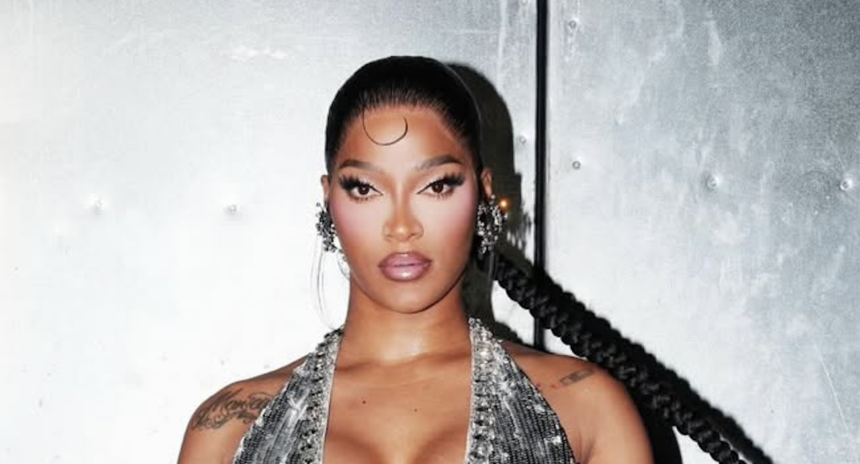
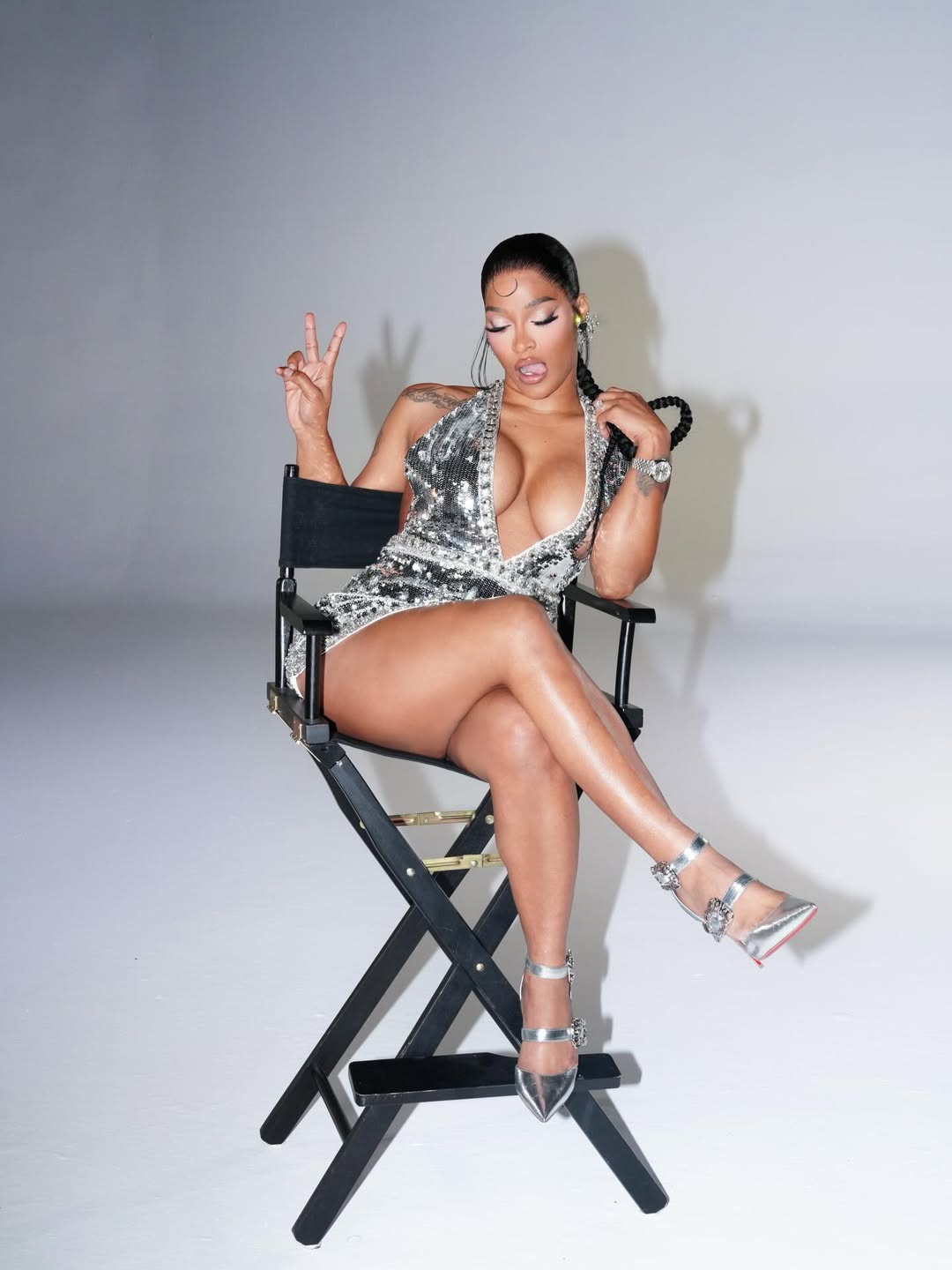
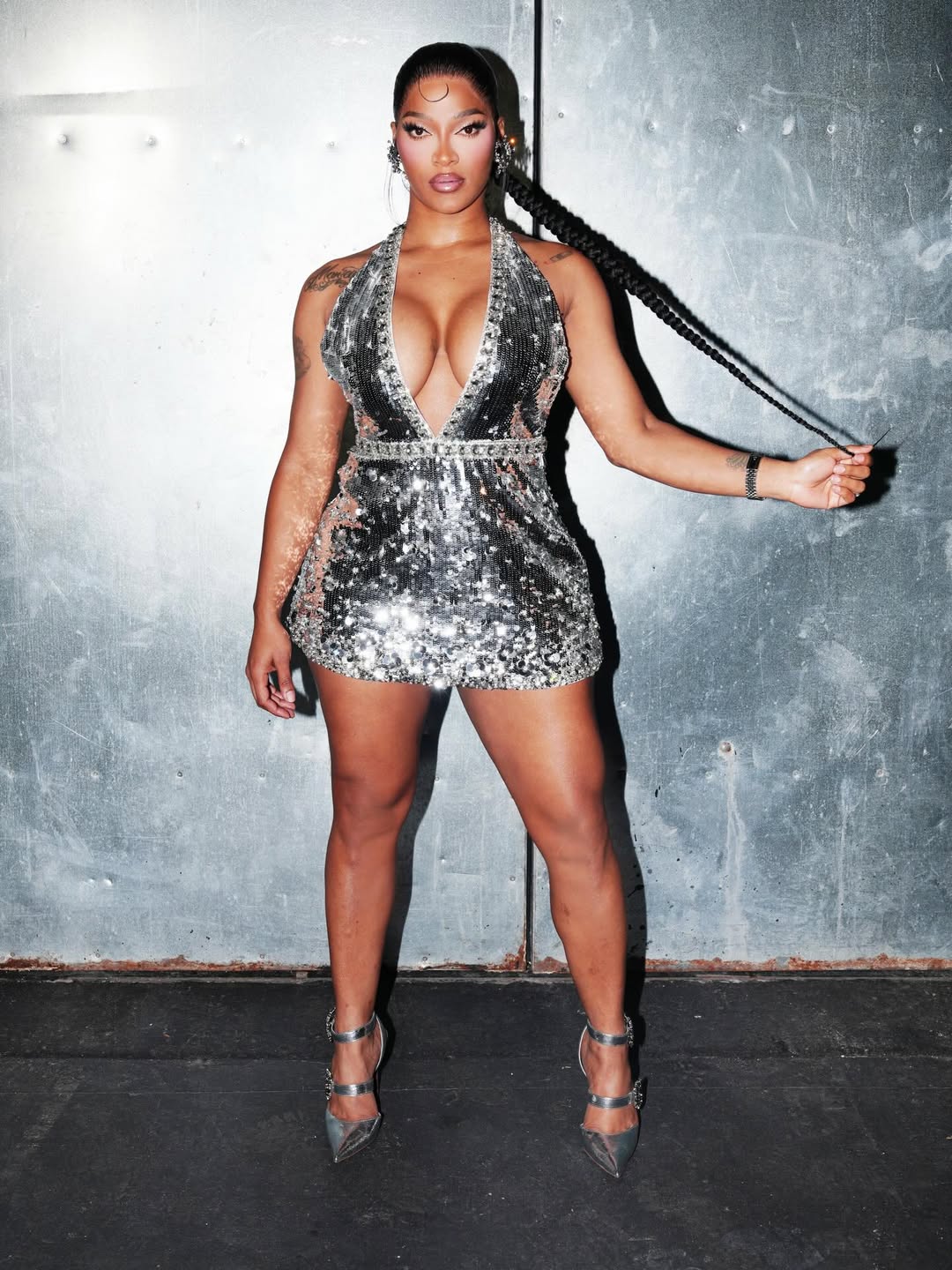
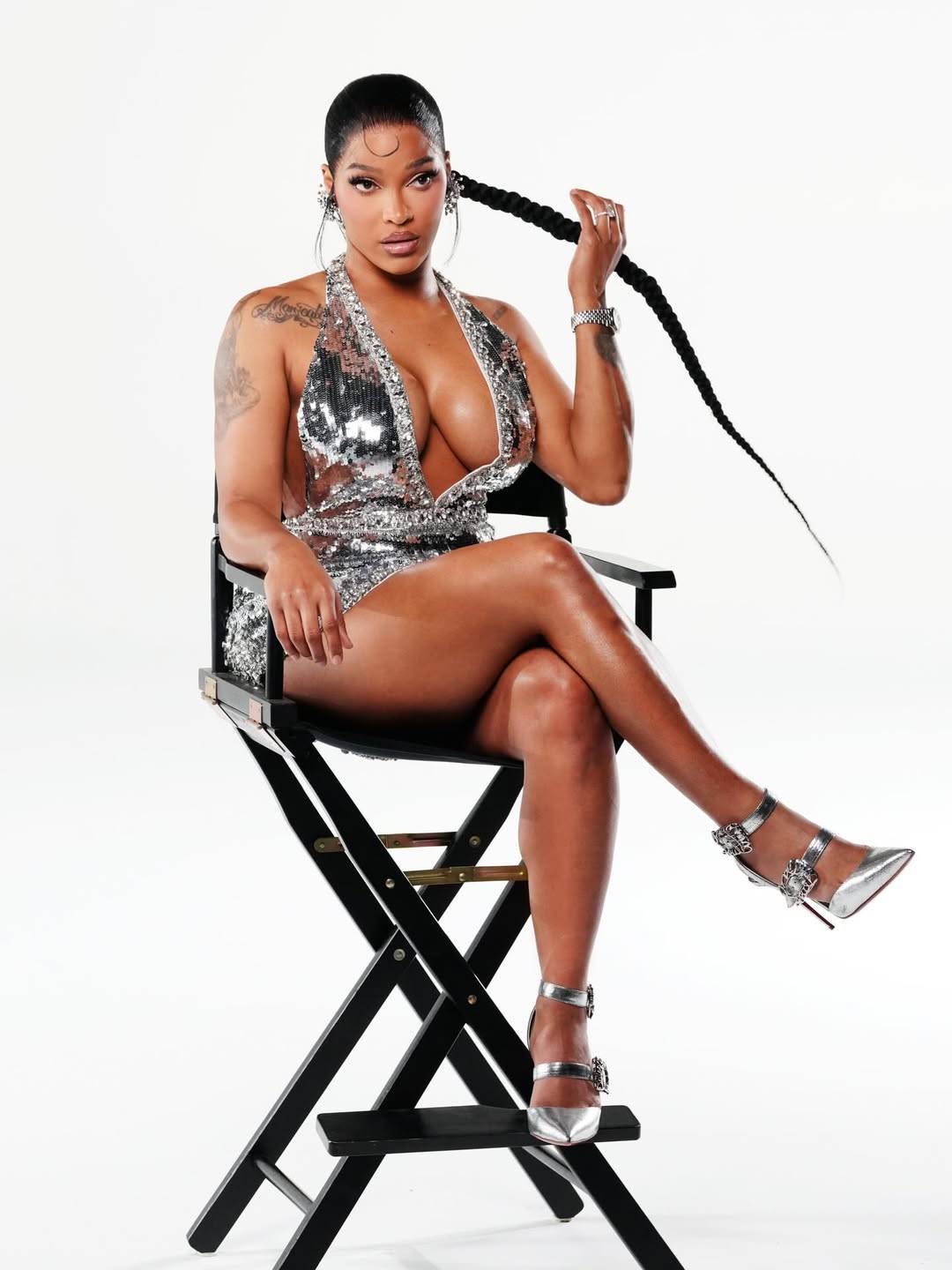
The interview, conducted on the set of a multi-camera video shoot for one of her upcoming projects, was as visually striking as it was emotionally raw. The first frame—a polished portrait—shows Joseline perched on a tall black director’s chair against a seamless light grey backdrop.
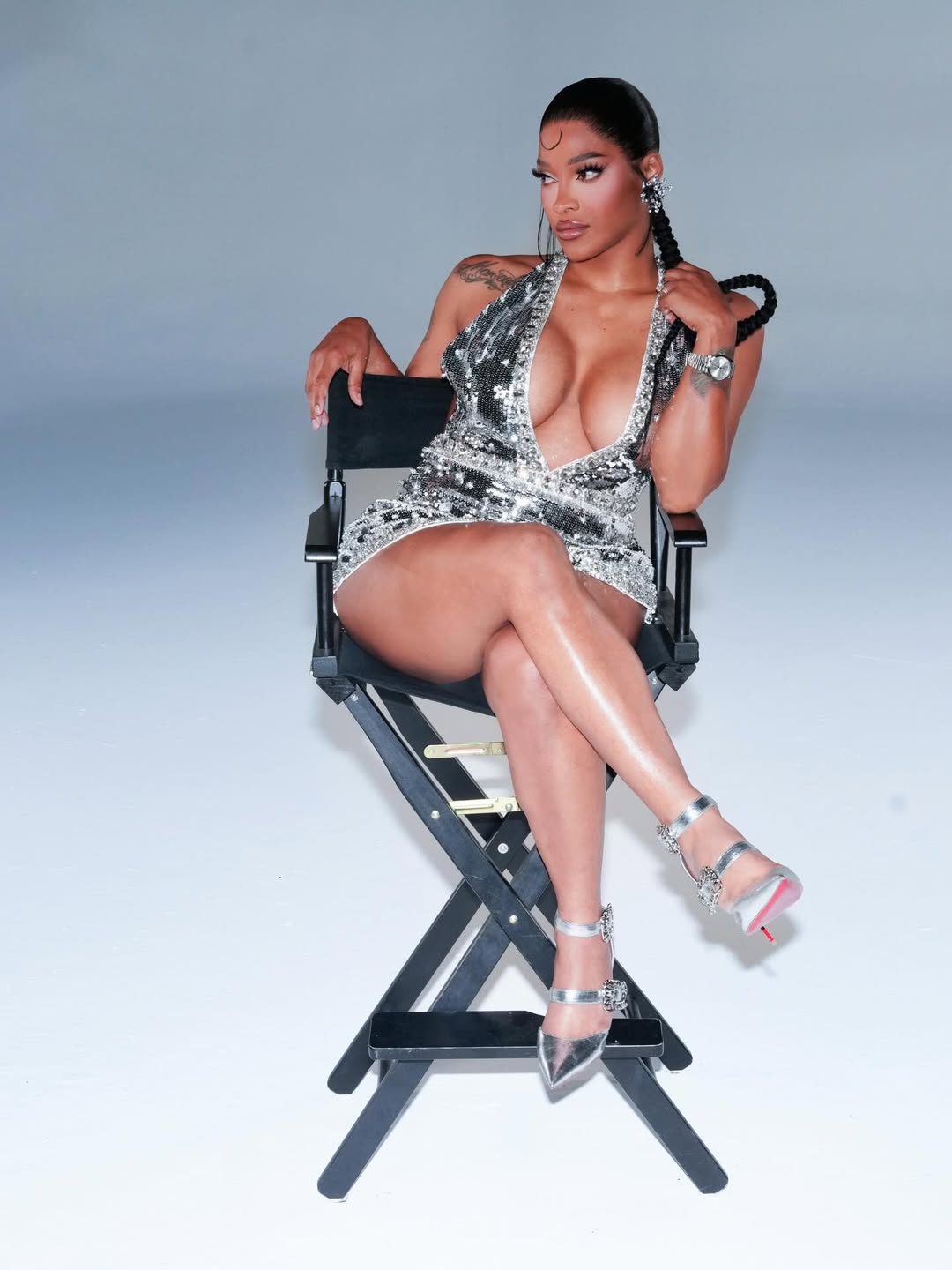
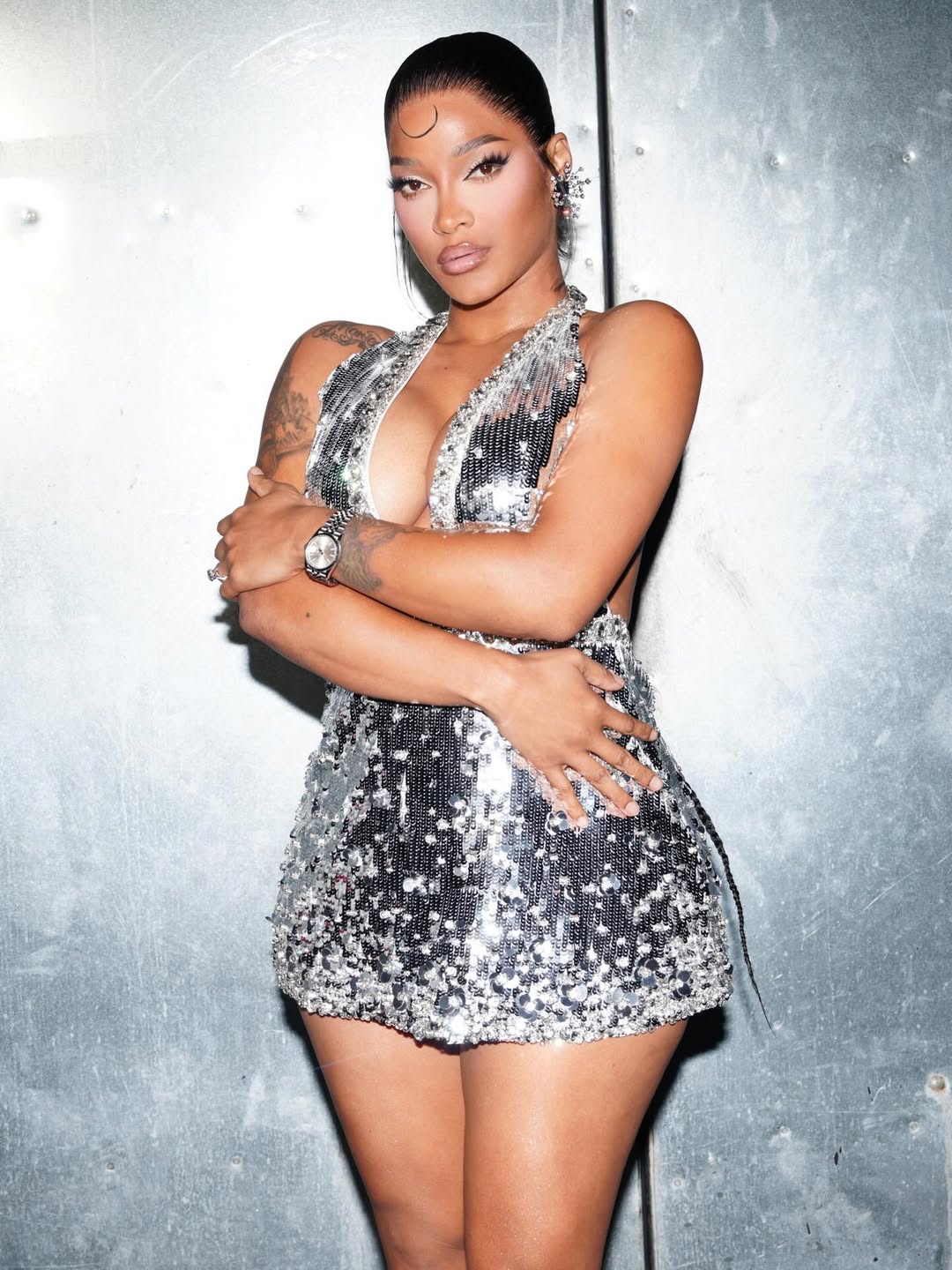
She wears a silver halter mini dress covered in sequins and crystals, with a Black geometric stripe pattern and a deep plunge that drops to her midriff. Her hair is slicked into one extra-long, thick braid draped over her shoulder. A small Black crescent moon is drawn in the center of her forehead—a signature mark that feels almost spiritual, a symbol of the duality she navigates daily.
Her pose is pure Joseline: right arm draped over the chair back, left hand playing with the braid, chin slightly down, eyes looking off to the side. The mood is confident, unbothered, and regal—the “Puerto Rican Princess” persona she has cultivated on hits like Joseline’s Cabaret.
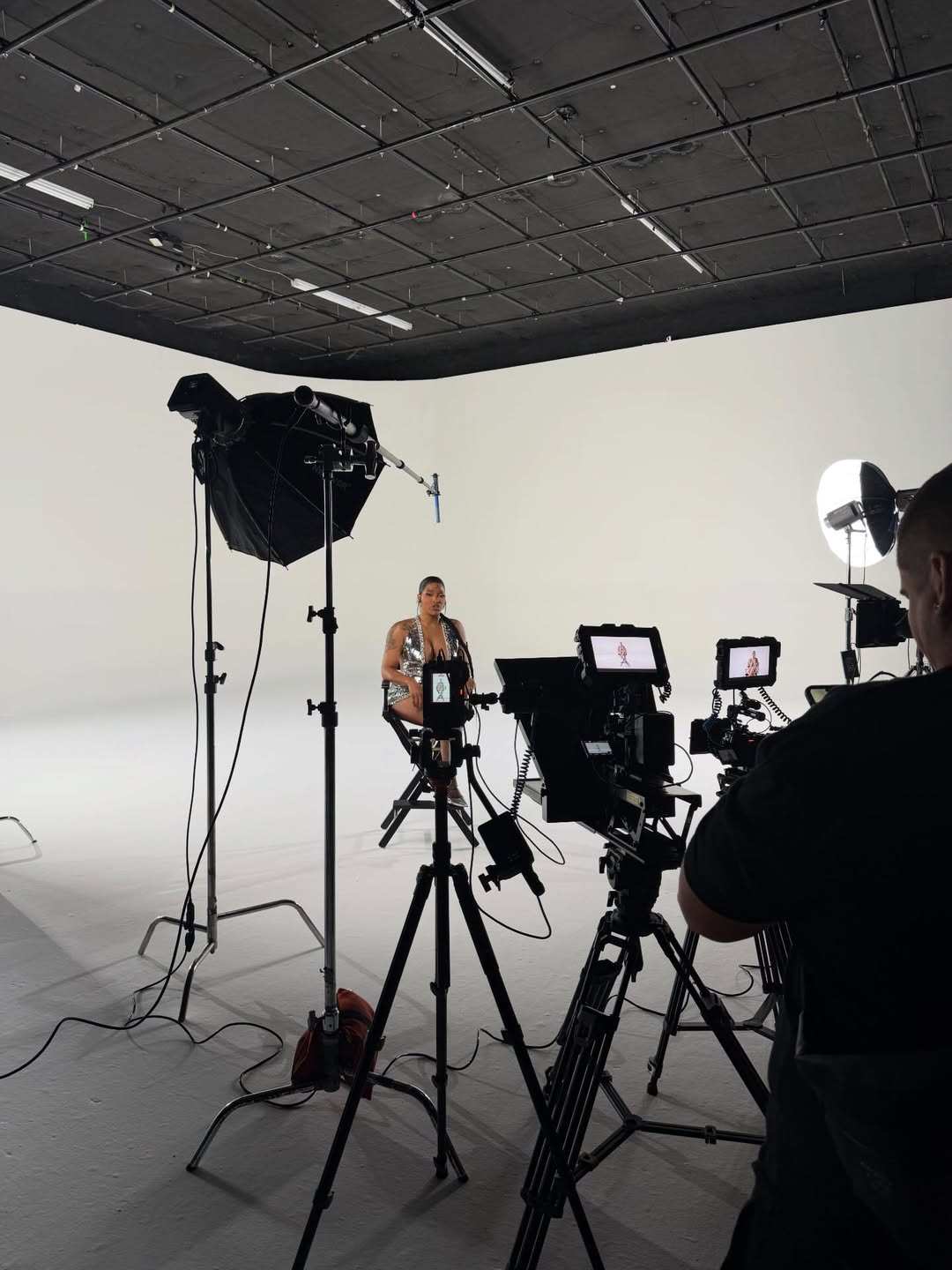
But the second frame pulls the curtain back. It is the same outfit, same chair, but now you see the studio. Three cinema cameras on heavy tripods. A large octabox soft light on a C-stand. A boom mic overhead. Cables, sandbags, and a crew member in Black operating a camera on the right edge of the frame. It’s a multi-camera production—likely for her cabaret series or a music video. And the polished image is the hero still pulled from the live feed.
This setting—raw, unflinching, and unfiltered—matches the interview’s tone where she was documenting truth.
Her decision to speak openly about anti-Blackness marks a significant pivot for a woman who has often been reduced to tabloid headlines. Now, at 39, with three years of sobriety under her belt and a new streaming network (WAYHtv) that she built herself, Joseline Hernandez is choosing to be a voice for those who have been told to stay quiet.
“I chose something different,” she said, though not in so many words. Her life—her openness about her identity as a “Spanish Black woman,” her insistence on naming what others avoid—is the proof.
The interview has already sparked intense discussion online, with fans and critics alike praising her for addressing a topic that is rarely discussed so openly in mainstream Hispanic media. For Joseline, it is not about popularity. It is about legacy. And that legacy, she has decided, will include the uncomfortable conversations.
“I understand who she is,” Joseline repeated. And now, because of her willingness to speak, more people will understand who she is, too—and perhaps, in the process, understand themselves a little better.
Watch the full story HERE.