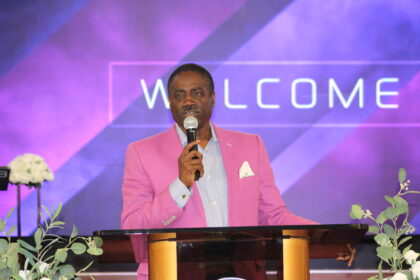



Amidst the high-energy atmosphere of the annual Single Seminar organized by the House of Miracles Evangelical Church, a voice of seasoned wisdom cut through the contemporary anxieties of dating. Evans Maah-Tayong, a Cameroonian US-based automobile maintenance professional and a man married for over two decades, offered a profound, culturally-anchored address on relationship building. Speaking not from a pulpit of doctrine but from the trenches of real life, Evans emphasized a crucial, often-overlooked necessity: the involvement of the family, particularly parents, as the foundational validation for a lasting union.
The seminar, orchestrated by Pastor Akin Obafemi to connect singles with genuine counsel, received a timeless philosophical framework from Evans. He stripped away the theological jargon, urging attendees to look to the “local world” and the wisdom of their elders.
The Litmus Test: The Parental Gate
Evans’s primary, unvarnished advice focused on immediate and unavoidable familial integration—a concept deeply rooted in Nigerian and African culture, where marriage is a covenant between two families, not just two individuals.


“Any boy, any girl who comes to your life and doesn’t want to see your sister, your father, your mom, you care for. They are not coming after marriage. They are coming for you for this purpose.”
He framed the avoidance of one’s parents as a litmus test for sincerity, suggesting ulterior motives like financial gain or short-term physical interest are at play. In a society where transactional relationships are increasingly common, Evans insists on the traditional, honorable step: bringing a potential partner home. This cultural ritual, which he advises must move from “your father to your pastor,” is the essential screening process that separates fleeting interest from genuine commitment.
His powerful metaphor warns against charting a solitary course: “If you don’t go through this process for your father, your mom to counsel, your pastor to counsel, you are going in the wrong direction by yourself.” It’s a call to humility, recognizing that decades of parental and spiritual guidance outweigh the momentary thrill of a new relationship.
The Open Eye: Finding Divinity in the Mundane
Evans challenged the common Christian practice of becoming spiritually myopic, advising singles to remain open to divine direction even when it appears outside the stained-glass confines of the church.
“Notice your partner may not come from church. God has placed your partner somewhere else. Your partner can even be a drunker, which you are the one to change.”
This remarkable statement serves as a beautiful, dangerous philosophy. It encourages singles to reject judgmentalism and the “holier-than-thou” attitude that leads to “snubbing” a person in the supermarket. In his view, potential divine connections—your future spouse—can arrive from any direction, often disguised in imperfections that require patience, grace, and spiritual guidance to transform. He emotionally recounted his own experience:
“The best girl I’ve ever had in my life. When she was coming from the farm, she was dead, and by the time cleaned up and came to meet me, I said, Wow… If I were looking for the shining girl, I would have just the wrong one.”
This imagery—the transformation of the “dirty” into the delightful—is a deeply empathetic plea to look past superficialities and allow God to reveal a diamond in the rough. It is a spiritual call to exercise compassion and faith in personal potential.
The Necessity of Mutual Respect
Finally, Evans addressed the common pitfalls of gender dynamics in modern unions. He advocated strongly for clear roles and mutual respect, warning women, “A woman wants to act like a man. You need a man. You’re a woman. You have to get [your place].”
His counsel is not about suppression but about recognizing essential complementarian roles. He stressed that a relationship thrives when both parties operate within their strengths and submit to counsel. His address ended on a note of spiritual assurance and emotional release, reminding everyone that while wealth and outward appearance are transient, the right partner will arrive from a seemingly unremarkable place, provided the eyes—and the heart—are open.
Evans’s message was a profound blend of faith and cultural wisdom. In the journey to marriage, the most powerful GPS is the guidance of your spiritual and biological parents, and the true prize is not the finished, “shining” product, but the imperfect, transformable human being standing right beside you.