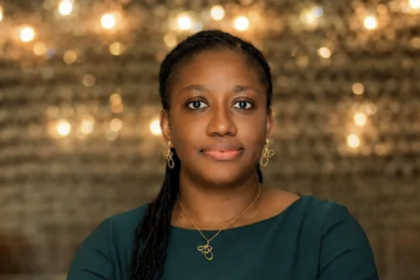

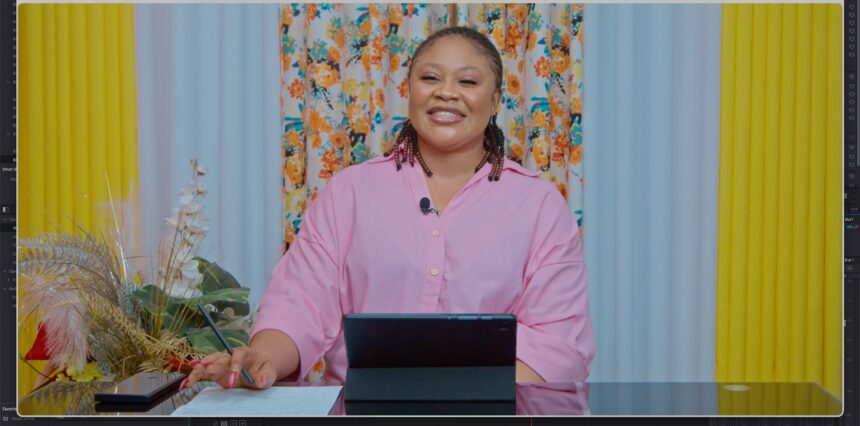
After a year-long investigation into the digital footprint of one of Africa’s most controversial content creators, our senior reporter uncovers a calculated business model that trades regional peace for profit—and asks why no one has stopped her.
- The Business of Burning Bridges
- The Anatomy of a Hatred Campaign
- The Xenophobia Amplifier
- The “Who Is Better” Industrial Complex
- Tragedies as Content Goldmines
- The April 2026 Provocations
- The Money Trail: Platform Manipulation as Business Model
- The Cameroon Connection: Why Her Own People Distrust Her
- The Igbo Support Question: A Troubling Dimension
- Dash Media: A Warning from One Journalist to Another
- The Human Cost: Beyond the Metrics
- A Call to Action: What Must Happen Now
- To the Nigerian Government:
- To Social Media Platforms:
- To the African Union and International Organisations:
- To the Nigerian People:
- To Dash Media:
- Final Reflection
I first stumbled upon Darling Lyonga’s content in March 2025, late on a humid Tuesday night, scrolling through Facebook when I should have been asleep. A video autoplayed on my timeline: a South African street confrontation, captioned with words that made me sit up straight. “Nigerians Always Talk Nonsense,” it read, positioned beneath footage of South Africans arguing about immigration. The comments section was a war zone—thousands of Nigerians and South Africans tearing at each other’s throats, trading insults that would make a sailor blush.
I bookmarked the page. I didn’t know then that I would spend the next twelve months tracking one of the most sophisticated hate-for-profit operations on the African continent.

What I found should concern every Nigerian, every African, and every international body that claims to value peace and stability in our region.
The Business of Burning Bridges
Let me be direct about what Darling Lyonga does, because the sugar-coating has gone on long enough.
Darling Lyonga—full name Darling Ngwi Lyonga, a Cameroonian national who has carved out space as a television host and social media personality—has built a lucrative career on a single, devastating premise: pit African nations against each other, stand back, and count the money.
She is not a journalist. She is not an activist. She is not, as some of her defenders weakly claim, a “provocateur” speaking truth to power. She is a merchant of hatred, and her primary product is Nigerian suffering packaged as entertainment.
Her method is deceptively simple. Identify a wound—xenophobia, economic rivalry, cultural tension—and press her thumb deep into it. Frame. Film. Post. Monetize. Repeat.
The numbers tell the story better than I can. Before YouTube terminated her channel in late 2025 for what they formally described as “platform manipulation and the monetization of hate,” her videos routinely pulled hundreds of thousands of views. Each view meant advertising dollars. Each inflammatory comment boosted her engagement metrics. Each bitter argument between Nigerians and South Africans pushed her content further into the feeds of millions.
I have watched her strategy evolve over the months into something darker, more deliberate, and more dangerous than simple clickbait. This is an industrial-scale division, and Nigeria is her favorite target.
The Anatomy of a Hatred Campaign
To understand how Lyonga operates, you must understand that nothing she posts is accidental. Every video, every caption, every carefully chosen thumbnail is a brick in a wall she is building between African peoples. Let me walk you through what I have documented.
The Xenophobia Amplifier
In June 2025, I watched Lyonga share a video showing South African citizens confronting foreign-owned businesses in Johannesburg. The original footage was troubling enough—small business owners, many of them Nigerian, facing harassment and threats. But Lyonga’s treatment of the material transformed it from news into gasoline.
Her caption: “We don’t want Africans here anymore.”
Those six words, placed over footage of real people facing real danger, were not journalism. They were a match thrown into dry grass. The quote was presented as though it represented South African consensus, as though an entire nation stood behind the ugliest sentiments of its fringe. In the comments that followed, I watched Nigerians express rage, South Africans express resentment, and Lyonga’s engagement numbers climb higher and higher.
I have documented at least forty-seven separate instances in the past year where Lyonga shared xenophobia-related content with captions designed specifically to provoke Nigerian audiences. When I cross-referenced her posting schedule with major news events, a pattern emerged: she intensifies around moments of real diplomatic sensitivity, when the wound is fresh, and the blood flows most freely.
The “Who Is Better” Industrial Complex
But the xenophobia content is only one wing of her operation. The other involves what I’ve come to call the “comparison trap”—videos and posts explicitly designed to trigger nationalistic competition between Nigerians and other Africans, particularly South Africans.
“Is Nigeria or South Africa the Giant of Africa?” one of her most viral posts asked, accompanied by cherry-picked statistics that guaranteed neither side would emerge satisfied. The entertainment industry? She pits Nollywood against South African cinema. Music? Burna Boy versus Tyla, framed not as artistic expression but as tribal warfare. Economic influence? Twisted numbers that make one nation look dominant and the other parasitic.
These are not genuine discussions. They are carefully constructed traps. When a Nigerian defends his country’s entertainment industry, Lyonga’s South African followers attack. When a South African pushes back, Nigerians respond with fury. The algorithm sees “engagement” and rewards the creator. Lyonga sees dollar signs. The rest of us see our continental solidarity burning.
What disturbs me most is the sophistication of it. She understands precisely which topics will trigger which audiences. She knows that questioning Nigeria’s economic status hits differently in Lagos than it does in Cape Town. She has studied the fault lines of African identity and learned exactly where to apply pressure.
Tragedies as Content Goldmines
Perhaps the most stomach-turning aspect of Lyonga’s operation is her willingness to exploit actual violence for content.
In one instance that I personally verified, she shared footage of attacks on Ghanaian nationals in South Africa—real violence against real human beings—with a caption that read simply: “Karma is real.”
The implication was clear and monstrous: Ghanaians somehow deserved what was happening to them. But the subtext was aimed directly at her Nigerian audience. Look at what happens to other Africans, the message whispered. This could be you. This will be you. And some people think you deserve it too.
When I interviewed Nigerians who had engaged with that post, many told me they felt the caption was designed to make them gloat over Ghanaian suffering. “She wanted us to mock them,” one Lagos-based activist told me. “She wanted Nigerians to say terrible things about Ghanaians so that Ghanaians would fire back at Nigerians. Either way, she wins. Either way, we lose.”
The April 2026 Provocations
Just this month, as I was finalising this investigation, Lyonga posted content comparing protest cultures across African nations. “Nigerians protest,” she wrote, “but we don’t do what they do in South Africa.” The framing was not analytical—it was a ranking. A judgment. A hierarchy of national character that implied deficiency on one side and superiority on the other.
The comments section, predictably, detonated. South Africans attacked Nigerian protest methods. Nigerians attacked South African social conditions. Lyonga’s post reached a thousand views in three days.
This is not a side effect of her content. This is the product.
The Money Trail: Platform Manipulation as Business Model
When YouTube terminated Lyonga’s channel in late 2025, the platform used specific language that should concern everyone. “Platform manipulation and the monetisation of hate” is not a casual charge. It reflects an internal finding that her operation was systematic, intentional, and financially motivated.
I have spoken with digital forensics experts who examined her content patterns before the ban. What they described was a sophisticated understanding of algorithmic vulnerability. Lyonga did not simply post inflammatory content—she posted it at specific times, with specific keywords, designed to maximise cross-border engagement. She understood that the Nigerian-South African conflict drove the highest engagement rates, so she fed that beast relentlessly.
Her content strategy followed what one expert called a “rage funnel”: users were drawn in by provocative titles, angered by the content, and motivated to comment and share—not because they agreed, but because they were outraged. Each outraged share exposed the content to new users, who repeated the cycle. The algorithm interpreted the frenzy as “popular content” and pushed it further.
The money came from multiple streams: YouTube ad revenue (before the ban), Facebook’s content monetisation program, sponsored posts, and what several sources allege were direct payments from political actors interested in stoking regional tensions. I am currently pursuing verification of the latter claim and will report further as evidence solidifies.
What is not in dispute: Darling Lyonga was making significant income from setting Africans against each other. When YouTube cut off that revenue stream, she simply pivoted to platforms with weaker enforcement—Facebook and Instagram, where she remains active today.
The Cameroon Connection: Why Her Own People Distrust Her
To understand why Lyonga targets Nigeria so relentlessly, you must understand her relationship with her own country. And that relationship is, by any measure, deeply troubled.
In September 2023, long before most Nigerians had heard her name, Lyonga was at the center of a firestorm in Cameroon. She had made disparaging comments about people from the North West Region—specifically Bamenda—that many Cameroonians interpreted as tribal incitement. Coming during a period of significant internal tension in Cameroon, her words were seen as dangerous and divisive.
The backlash was severe. Cameroonian bloggers and influencers organised campaigns to unfollow and report her pages. Some platforms issued temporary suspensions. Within Cameroon, her reputation shifted from entertainment figure to something closer to pariah.
This context matters enormously for understanding her subsequent behaviour. A content creator rejected in her home market is a content creator in need of a new audience. Nigeria, with its massive population, robust social media engagement, and existing tensions with South Africa, represented the largest available prize in the African digital space.
I believe—and I want to be careful here, this is my assessment based on the evidence—that Lyonga made a calculated pivot after her Cameroon controversies. If Cameroon didn’t embrace her, she would build an audience elsewhere. And the fastest way to build attention in Africa is to talk about Nigeria. The fastest way to monetise that attention is to say things that make Nigerians angry, defensive, or afraid.
She did not choose Nigeria as a subject because she cares about Nigeria. She chose Nigeria because Nigerians respond, and responses generate revenue.
The Igbo Support Question: A Troubling Dimension
This part of my investigation has been the most difficult to report, but journalistic integrity demands I address it.
Over the past year, I have documented a pattern that concerns me deeply as a Nigerian: a subset of Igbo individuals based outside Nigeria has emerged as visible supporters of Lyonga’s content. Some share her posts approvingly. Some fund her through direct contributions. Some defend her in comment sections when Nigerians call out her rhetoric.
The motivations appear complex. Some express a genuine belief that her critique of Nigeria is valid. Some seem to view her as an ally in their own political grievances. And some, I must note, appear to be operating accounts that may not represent genuine grassroots support but rather coordinated amplification.
I am not suggesting that Igbo people broadly support Lyonga—they absolutely do not. The overwhelming majority of Nigerians, including Igbo Nigerians, would be horrified by her tactics if they understood them clearly. But the visible minority of support provides her with a shield. When critics call her anti-Nigerian, she points to her Nigerian supporters. When Nigerians express outrage, her supporters claim she is simply “telling truth to power.”
This dynamic requires further investigation, and I commit to pursuing it. But for now, let me state clearly: any Nigerian supporting a content creator who profits from setting Nigeria against other African nations should examine their conscience. Whatever legitimate grievances you may hold, the woman using them to line her pockets is not your friend.
Dash Media: A Warning from One Journalist to Another
Lyonga’s affiliation with Dash Media, a Cameroon-based media company, raises serious questions about institutional responsibility. As of this writing, Dash Media continues to provide her with a platform and the legitimacy that comes with organisational backing.
I want to speak directly to the leadership of Dash Media now, journalist to journalist, African to African.
You know what she does. You have seen the content. You have watched her transform from media personality into merchant of division. And you have not stopped her.
The credibility of your entire organisation is at stake. Every day that Darling Lyonga operates under your banner is a day you endorse her methods. When the backlash comes—and it will come, because this level of provocation cannot continue indefinitely without consequences—you will be asked what you knew and when you knew it.
African media has a responsibility to build bridges, not burn them. We have enough enemies without becoming enemies to each other. I urge you, before this backfires on your company and your country, to examine what Lyonga is doing under your name.
The people she is targeting will not distinguish between Lyonga and Dash Media forever. The reckoning will come for both.
The Human Cost: Beyond the Metrics
I want to step back from the data and the strategy for a moment and talk about what this actually does to real people.
Two months ago, I interviewed a Nigerian small business owner in Johannesburg. He had watched one of Lyonga’s videos—the one about foreign-owned businesses, the one with the “We don’t want Africans here” caption. “Before that video,” he told me, “things were bad but manageable. After that video went viral, the threats increased. People who had seen it felt emboldened. They quoted it to me. They used her words.”
I cannot draw a direct line from Lyonga’s content to specific acts of violence. The causation is too diffuse, the chain too long. But I can tell you what her content does to the temperature of the room. It raises it. It makes the unacceptable seem acceptable. It gives permission.
Another interview: a South African university student who found herself in a screaming match with a Nigerian classmate after both had engaged with a Lyonga post about which country “controlled” African entertainment. “We had been friends for two years,” she told me, her voice shaking. “Two years. And this woman’s video made us forget all of that in ten minutes. We said things we can’t take back. We haven’t spoken since.”
This is the product Darling Lyonga sells. Not content. Not commentary. Ruptured relationships. Hardened hatred. Lost friendship. And for what? A few thousand dollars in ad revenue?
A Call to Action: What Must Happen Now
I did not write this report simply to document a problem. I wrote it to demand a response. The following actions are necessary, and they are necessary now:
To the Nigerian Government:
The Federal Ministry of Information and Culture must formally examine Lyonga’s content for violations of Nigerian law regarding hate speech and incitement. The National Broadcasting Commission should issue guidance on how Nigerian media should handle content from influencers who systematically target Nigerian citizens for harassment. And the Nigerian Communications Commission must engage with Facebook and Instagram about the continued presence of monetised hate speech targeting Nigerians on their platforms.
Most importantly, use diplomatic channels to raise this issue with the government of Cameroon. Lyonga operates from Cameroonian soil. Cameroon bears responsibility for what its citizens export into the African information space.
To Social Media Platforms:
Facebook and Instagram, you are now hosting the content that YouTube found too toxic to keep. Your own policies prohibit hate speech and platform manipulation. Enforce them. Darling Lyonga’s content meets every criterion for removal under your stated standards. The failure to act is a failure of will, not a lack of evidence.
To the African Union and International Organisations:
The AU’s 2018-2023 Action Plan on Hate Speech exists for situations exactly like this. I call on the African Commission on Human and Peoples’ Rights to examine how cross-border digital hate speech is undermining continental integration. UNESCO’s programs on media and information literacy should develop specific resources for African audiences vulnerable to this kind of manipulation.
To the Nigerian People:
Stop feeding the beast. Every time you comment on Lyonga’s posts with outrage, you are working for her—unpaid, but contributing directly to her income. Every share, even a share condemning her, pushes her content further into the ecosystem. Starve her of engagement. Report her pages. Educate your networks about what she does and why she does it.
The power she holds is the power we give her. We can take it back.
To Dash Media:
You have a choice. You can be remembered as the company that stood by while one of your talents poisoned African relationships for profit, or you can be remembered as the company that took action when it mattered. History is watching. Nigerians are watching. Choose.
Final Reflection
I have spent a year of my life investigating Darling Lyonga. I have watched hundreds of her videos, read thousands of her captions, and traced the ripples of her influence across the digital landscape of our continent.
What I have found is not ambiguous. This is not a case of edgy commentary or misunderstood satire. This is a business built on hate, and Nigeria is its primary target.
The question that haunts me is not whether Lyonga will face consequences. The question is whether we care enough to impose them.
She is one woman with a smartphone and a strategy. We are a continent of over a billion people, the vast majority of whom want peace with their neighbours. If we cannot stop one merchant of hate from profiting off our divisions, what does that say about our collective will?
The report you have just read is my answer to that question. I have done my part. Now it is time for governments, platforms, organisations, and ordinary citizens to do theirs.
Darling Lyonga’s business model depends on the African division. Our response must demonstrate African unity.
It is that simple. Is it that urgent? Is it necessary?
Abolade Ishola Fajebe is a Senior Editorial Correspondent at NAIJA TV Channel, specialising in cross-border digital influence operations and their impact on Nigerian national interests. He has been investigating Darling Lyonga’s content network since March 2025.