

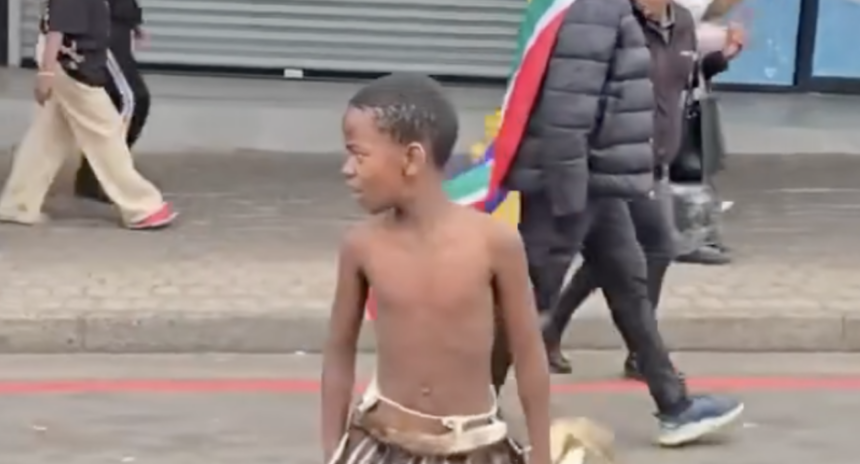
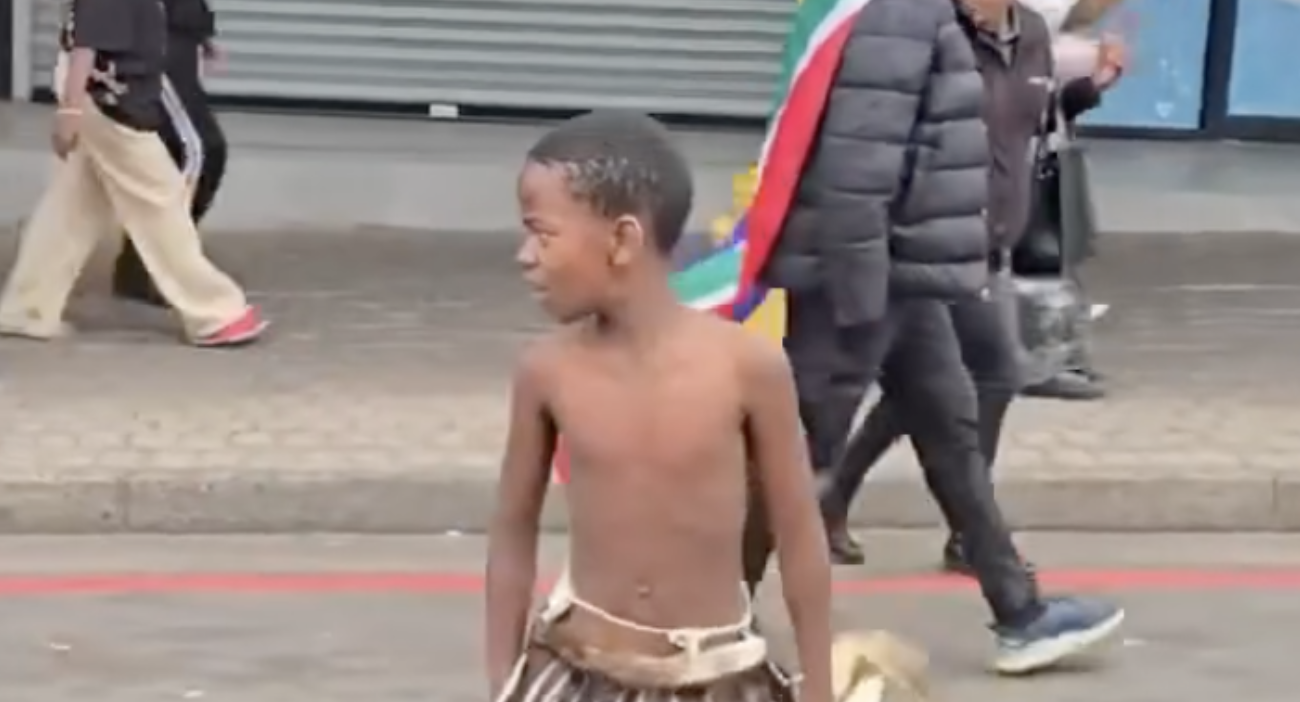
A single, striking image has emerged from today’s nationwide anti-migrant protests: a young boy, wrapped in traditional Zulu regalia, marching at the heart of the crowd, his voice raised in chant alongside thousands of adults.
The child who marched for xenophobia – and the future he may one day regret
The videograph captures a moment of unsettling contrast. The child, full of youthful energy, enthusiastically mirrored the adults around him, singing slogans he could not possibly understand. To him, the intense demonstration was merely a crowd to follow, a song to sing, a spectacle of shared motion and noise.


Yet, for onlookers, the image was haunting. Observers noted that the boy possessed no real knowledge of the xenophobic movement he was participating in. His innocence stood in sharp relief against the bitter reality of the protest — a march driven by anger, fear, and hostility toward Black foreign nationals.
The photograph has sparked widespread debate online, with many reflecting on the irony and tragedy of children being drawn into movements they cannot comprehend. Some commentators wondered aloud whether the boy, upon reaching manhood, would look back on this day with regret. Will he realise that South Africa’s development, economy, and communities have long been built with the vital contributions of foreigners? Will he question the hate he was taught to sing?
The image of the marching child serves as a sobering reminder of the generational consequences of xenophobia.
In a single frame, it captures the innocence of youth, the weight of inherited prejudice, and the possibility of future regret — a child caught in a storm he did not create, singing a song he did not write.