







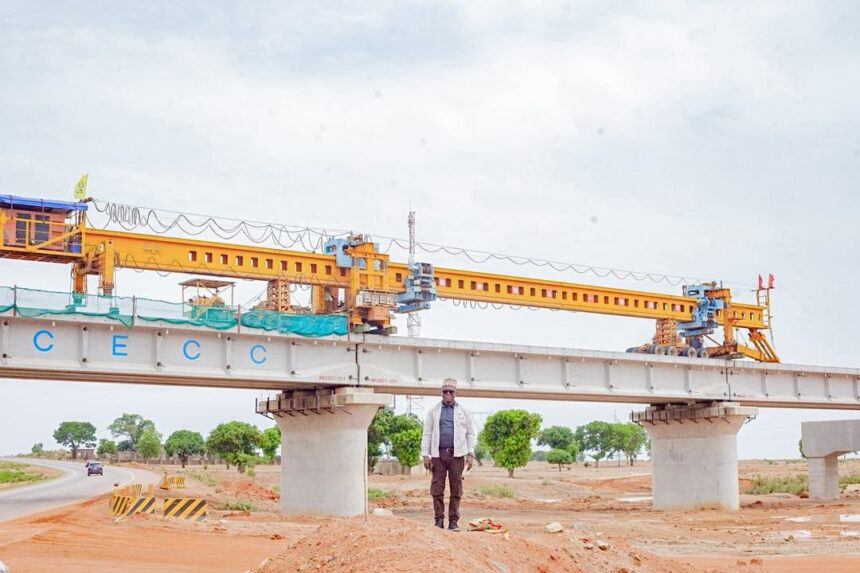
Across the country, thousands of kilometres of highways, rail lines, and deep‑sea ports are taking shape as Nigeria accelerates its infrastructure push to achieve a historic trillion‑dollar economy by 2030 – a milestone that would make it the first African country and first Black nation to reach $1 trillion in nominal GDP.
The government is executing several mega‑projects simultaneously. The 700‑kilometre Lagos‑Calabar Coastal Highway and the 1,000‑kilometre Sokoto‑Badagry Expressway are linking northern agricultural zones to southern ports. The Badagry‑Socodé corridor will connect Nigeria to Benin, Togo, and Ghana, boosting West African trade.
In rail, the Kano‑Maradi line is extending into the Niger Republic, while the Abuja‑Kano road reconstruction is easing movement along the nation’s busiest artery. At sea, the Lekki Deep Sea Port – Nigeria’s first fully automated facility – is already operational, and the Badagry Deep Sea Port is advancing through development phases.


These projects, centred around the Lekki Free Trade Zone, are designed to drive export‑led industrialisation. To hit the 1 trillion target, Nigeria must maintain 10‑1250 billion in domestic investment commitments.
Officials say modern infrastructure is the backbone of the plan to transform Nigeria into a trillion‑dollar economy within the decade.