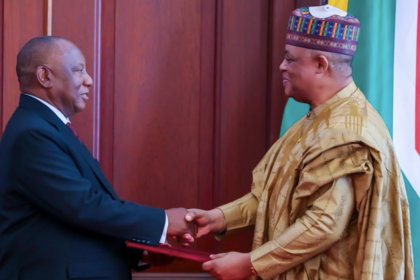







For 62 years, Nigeria—the so-called Giant of Africa—was importing its own passport booklets. It was a bureaucratic and economic embarrassment that kept the country reliant on foreign suppliers and capped personalisation at a pathetic 300 passports a day.
Now, President Bola Tinubu is putting an end to that era.
Construction has officially begun on a $70 million, privately funded passport booklet factory at the Nigeria Immigration Service headquarters in Abuja. Built in partnership with Nigerian-based Iris Smart Technologies, this facility is the first of its kind in West Africa and a masterstroke in Tinubu’s drive toward a $1 trillion economy by 2030.


The numbers behind this legacy project are staggering. The plant will initially produce 6 million booklets a year, with the capacity to scale up to 10 million. Since Nigeria only needs about 1.8 to 2 million annually, Abuja is now positioned to supply the rest of ECOWAS and wider African markets, earning massive foreign exchange and keeping the entire value chain on home soil.
The speed of production is equally ruthless. Personalisation capacity is set to jump from a mere 300 a day to a staggering 5,000 within five work hours. The facility is fully AI-driven and designed to operate off-grid, completely sidestepping the nation’s power grid issues.
To Nigerians, this is a national security fortress. The factory complements the 8.3-petabyte immigration data centre, the 18 million migration records it supports, and the electronic gates already active at five airports. It creates jobs, transfers specialised tech skills, and ensures a sensitive national document is manufactured securely at home.
The construction clock is ticking, with a tight six-month window to hit the May 2027 commissioning date on the Sauka site.
Tinubu is building the infrastructure to print the future.